Thai Bodywork: A Guide to the Art and Science of Nuad Thai
You might have heard it called "lazy man's yoga" or "acupressure on steroids." But calling Nuad Thai is a holistic healing system combining acupressure, Indian Ayurvedic principles, and assisted yoga postures just scratches the surface. It’s not a spa treatment where you lie down and zone out while someone rubs your back. Thai bodywork is active, rhythmic, and deeply physical. If you’ve ever felt stiff after sitting at a desk all day, or if your joints feel like rusty hinges, this practice offers something modern Western massage often misses: mobility.
The confusion starts because people lump Thai massage into the same bucket as Swedish or deep tissue work. They aren’t the same. In a standard massage, the therapist works on you. In Thai bodywork, you work with them. The goal isn't just relaxation; it's to clear blockages in the body’s energy pathways, known as sib sen, or ten main energy lines. When these lines are blocked, pain follows. When they flow freely, so does your life force, or lom.
Where Did This Practice Come From?
To understand why Thai bodywork feels different, you have to look at its roots. It didn't pop up in a luxury resort in Phuket. Its origins trace back over 2,500 years to India, closely linked to the teachings of Jivaka Kumar Bhaccha, the personal physician of the Buddha. When Buddhism spread to Thailand, the medical knowledge traveled with it. Over centuries, this Indian Ayurvedic framework merged with local Chinese herbal traditions and indigenous animist beliefs about spirit and body.
For a long time, this knowledge was kept alive only in temples. Monks were the primary healers. You’d go to a wat (temple) for spiritual guidance and physical relief. Today, UNESCO recognizes Traditional Thai Massage as an Intangible Cultural Heritage of Humanity, which validates what practitioners have known for generations: this is serious science wrapped in art.
The Core Mechanics: How It Actually Works
If you book a session, expect to stay fully clothed. You’ll wear loose, stretchy pants and a top provided by the clinic. No oils, no lotions. Why? Because the therapist needs friction to push, pull, and stretch you. The session takes place on a firm mat on the floor, not a table. This setup changes everything. Gravity becomes a tool. The therapist uses their hands, knees, legs, and feet to manipulate your body.
Here is the breakdown of the three pillars that make up the technique:
- Acupressure: The therapist applies steady pressure along the sib sen. These aren't random spots. They correspond to specific organs and systems. Pressure on the line running down the leg, for example, can relieve digestive issues.
- Assisted Yoga: The therapist moves your limbs into yoga-like positions. Think of it as passive stretching. You don't hold the pose; they do the work. This improves range of motion without the strain of active exercise.
- Rhythmic Compression: There is a cadence to the work. It’s not erratic. The therapist rocks, presses, and releases in a rhythm that calms the nervous system while physically opening tissues.
The combination creates a unique physiological response. Your heart rate drops, but your muscles get a workout. It’s paradoxical, but effective.
Energy Lines vs. Muscle Tissue
Western anatomy focuses on muscles, fascia, and nerves. Thai bodywork focuses on sib sen. While some skeptics dismiss energy lines as mystical, there is a functional overlap with myofascial meridians. Whether you view it through a scientific lens of fascia release or a spiritual lens of energy flow, the result is the same: tension dissipates.
| Feature | Thai Bodywork (Nuad Thai) | Standard Western Massage |
|---|---|---|
| Clothing | Loose, comfortable clothes | Nudity with draping |
| Surface | Firm mat on the floor | Padded massage table |
| Medium | No oil or lotion | Oils, lotions, or creams |
| Client Role | Active participant (stretches) | Passive recipient |
| Primary Goal | Mobility and energy flow | Muscle relaxation and circulation |
This distinction matters if you hate being touched in vulnerable areas or dislike the smell of massage oils. Thai bodywork keeps things grounded and practical. It’s also great for athletes who need flexibility more than they need relaxation.

What Happens During a Session?
A typical session lasts between 60 and 90 minutes. It usually starts with the client lying on their back. The therapist begins with gentle warming strokes to prepare the body. Then, the work intensifies. You will likely feel pressure on your feet, moving up to the calves, thighs, and hips. This is where the energy lines are densest.
Then comes the rolling. The therapist will roll you onto your side, then your stomach. They might use their feet to walk on your back. Don’t panic-this is controlled. Their weight is distributed carefully. If it hurts too much, say so. Good therapists adjust immediately. Communication is key here. Unlike some spa massages where silence is golden, in Thai bodywork, feedback ensures safety.
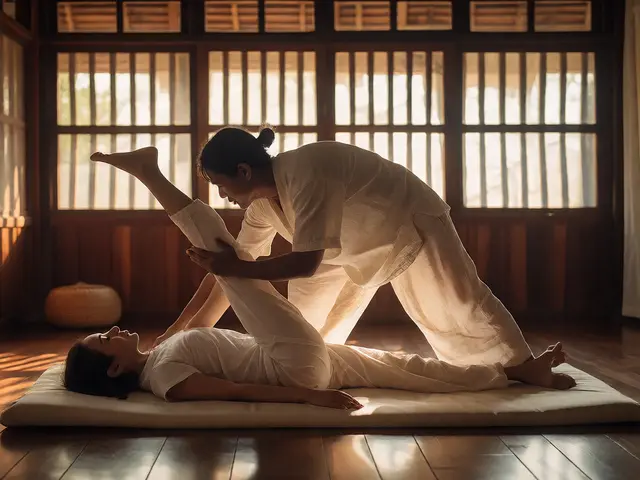
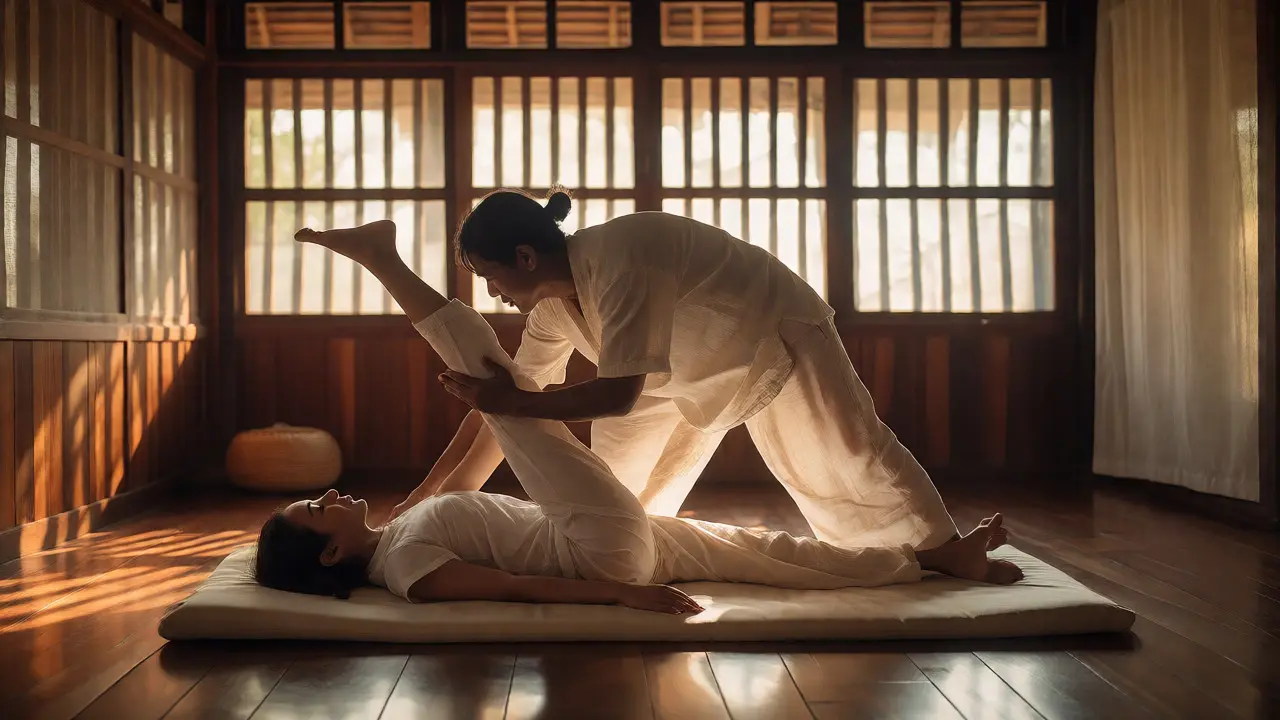
The climax of the session often involves deep stretches. The therapist might take your leg and pull it toward your head, opening the hip flexors. Or they might twist your torso while stabilizing your shoulders. These movements target the spine and core, areas often neglected in standard back rubs.
Who Should Try It? (And Who Should Skip It)
This isn't for everyone. If you want to nap during a massage, Thai bodywork might be too stimulating. It requires a certain level of physical comfort with having your body manipulated. However, for many, it’s a game-changer.
Ideal candidates include:
- Office workers with chronic neck and shoulder tension.
- Runners and cyclists with tight hamstrings and hip flexors.
- People with mild arthritis seeking joint mobility.
- Those who prefer dry touch and no oils.
Proceed with caution if you have:
- Recent surgeries or acute injuries.
- Severe osteoporosis (bone density issues).
- Pregnancy (unless seeing a specialist trained in prenatal Thai massage).
- High blood pressure that is uncontrolled.
Always disclose your health history. A qualified practitioner knows how to modify techniques. For instance, if you have a bad knee, they won’t put weight on it. They’ll work around it.

Finding a Qualified Practitioner
Not all Thai massages are created equal. In tourist hubs, you might find quick, aggressive treatments that leave you bruised rather than balanced. Look for clinics affiliated with reputable schools, such as the Wat Pho School of Traditional Medicine in Bangkok, which is considered the gold standard for training.
Ask questions before booking. Does the therapist explain the process? Do they ask about your pain points? Do they offer modifications? A good practitioner treats the session as a collaborative effort. They should check in regularly. "Is this pressure okay?" "How does this stretch feel?" If they ignore your cues, walk away.
Price varies widely. In Thailand, a high-quality temple massage might cost $10-$15 USD. In the US or Europe, expect to pay $80-$150 per hour. The higher price in Western countries reflects overhead and licensing requirements, not necessarily superior technique. Sometimes, the most authentic experience is found in smaller, community-focused studios rather than five-star hotel spas.
The Aftermath: What to Expect
After a session, you might feel lightheaded or incredibly thirsty. This is normal. The manipulation of energy lines and tissues releases toxins and shifts fluid balance. Drink water. Lots of it. Some people report feeling energized, others feel sleepy. Both reactions are valid signs that your parasympathetic nervous system has engaged.
You might notice increased flexibility the next day. Try touching your toes. If you couldn’t before, and now you can, the work paid off. Effects can last days or weeks, depending on your lifestyle. If you sit for eight hours a day, one massage won’t fix everything. Consistency matters. Monthly sessions are a common maintenance schedule for regulars.
Why It Matters Now
In an era of sedentary jobs and screen addiction, our bodies are shrinking. We lose range of motion slowly, until we can’t turn our heads or bend down to tie shoes. Thai bodywork counters this. It forces movement. It reminds your body what it’s capable of. It’s not just about relieving pain; it’s about reclaiming agency over your physical form.
It bridges the gap between therapy and fitness. You’re getting a stretch, a massage, and a meditation in one hour. That efficiency appeals to busy people. But beyond the logistics, there’s a cultural richness. Engaging with Thai bodywork connects you to a lineage of healers who viewed health as a balance of elements, not just the absence of disease. It’s a humbling reminder that sometimes, the best way to heal is to let someone else help you move.
Does Thai bodywork hurt?
It can be intense, but it shouldn't be painful. You should feel strong pressure and deep stretches, but never sharp pain. If it hurts, tell the therapist immediately. They can reduce the intensity. "Good pain" feels like a deep ache that releases tension; "bad pain" feels like stabbing or burning.
Do I need to be flexible to try Thai bodywork?
No. In fact, less flexible people often benefit the most. The therapist performs the stretches for you, working within your current range of motion. They gradually increase the depth of the stretch. It is not a test of your yoga skills; it is a therapeutic intervention.
What should I wear to a session?
Most clinics provide loose-fitting clothing, typically wide-legged pants and a loose top. Wear undergarments that are comfortable and allow movement. Avoid wearing jewelry or tight belts. If you bring your own clothes, choose breathable fabrics like cotton or linen that stretch easily.
How is Thai bodywork different from sports massage?
Sports massage focuses on specific muscle groups affected by athletic activity, often using oils and targeting trigger points. Thai bodywork is full-body, incorporates passive stretching, and works on energy lines. Sports massage is often localized; Thai bodywork is systemic and aims to improve overall mobility and energy flow.
Can I eat before a Thai bodywork session?
Avoid heavy meals right before a session. Since the therapist may compress your abdomen and twist your torso, a full stomach can cause discomfort or nausea. Light snacks are fine, but wait at least 1-2 hours after a large meal. Hydrate well beforehand, but avoid excessive fluids right before to prevent needing a bathroom break mid-session.


About Author