
Lomi Lomi Massage: What It Is, Benefits, and How to Experience It
Imagine lying on a warm table, feeling long, flowing strokes that seem to wrap around you like a gentle wave. There is no sharp pressure, no sudden kneading of knots. Instead, there is a rhythmic, continuous motion that feels less like a medical procedure and more like being held in a slow dance. This is Lomi Lomi, the traditional massage technique from Hawaii that has been transforming how people experience touch for centuries.
If you have ever left a standard Swedish massage feeling relaxed but still carrying tension in your shoulders, or if deep tissue work leaves you bruised and sore, Lomi Lomi might be the missing piece in your wellness routine. It is not just about fixing muscles; it is about reconnecting the body, mind, and spirit through the concept of Aloha.
Key Takeaways
- Lomi Lomi is a traditional Hawaiian massage characterized by long, gliding strokes using forearms and elbows rather than just hands.
- The practice emphasizes the flow of energy (Mana) and emotional release, making it distinct from purely physical therapies like Deep Tissue.
- Benefits include significant stress reduction, improved circulation, and relief from chronic pain conditions like fibromyalgia.
- You should avoid this massage if you have acute injuries, open wounds, or high blood pressure, as the warmth and intensity can affect blood flow.
- Choosing the right therapist requires looking for specific training in Hawaiian traditions, not just general massage certification.
What Exactly Is Lomi Lomi?
To understand Lomi Lomi is a traditional Hawaiian healing art that uses long, flowing strokes to promote relaxation and spiritual balance, you first need to look at the word itself. "Lomi" translates roughly to "to knead," "to press," or "to rub." But in practice, it goes far beyond simple kneading. Unlike Western massage styles that often isolate specific muscle groups-like focusing only on the trapezius or the calves-Lomi Lomi treats the body as one continuous unit.
Originating in ancient Hawaii, this practice was traditionally performed by family members or community healers known as Kahuna Lapaau. It was not just a luxury; it was a daily ritual for health maintenance. The technique involves the use of the therapist's entire body weight, utilizing forearms, elbows, palms, and even feet to create broad, sweeping motions. These movements mimic the rolling waves of the Pacific Ocean, creating a hypnotic rhythm that helps the recipient enter a state of deep trance-like relaxation.
The core philosophy behind Lomi Lomi is rooted in the belief that illness and pain stem from an imbalance in the body's energy, or Mana. By restoring the flow of this energy through touch, breath, and intention, the healer addresses both physical symptoms and emotional blockages. This makes it a holistic therapy rather than a mechanical one.
The Unique Techniques That Set It Apart
Have you ever noticed how most massages feel like a series of disconnected events? A minute on the neck, then the back, then the legs. Lomi Lomi breaks this pattern. The defining characteristic of this style is continuity. The therapist rarely lifts their hands off your skin. If they need to move from your shoulder to your hip, they slide across your body, maintaining constant contact. This unbroken connection helps regulate your nervous system, signaling safety and calm.
Here are the specific techniques you will experience during a session:
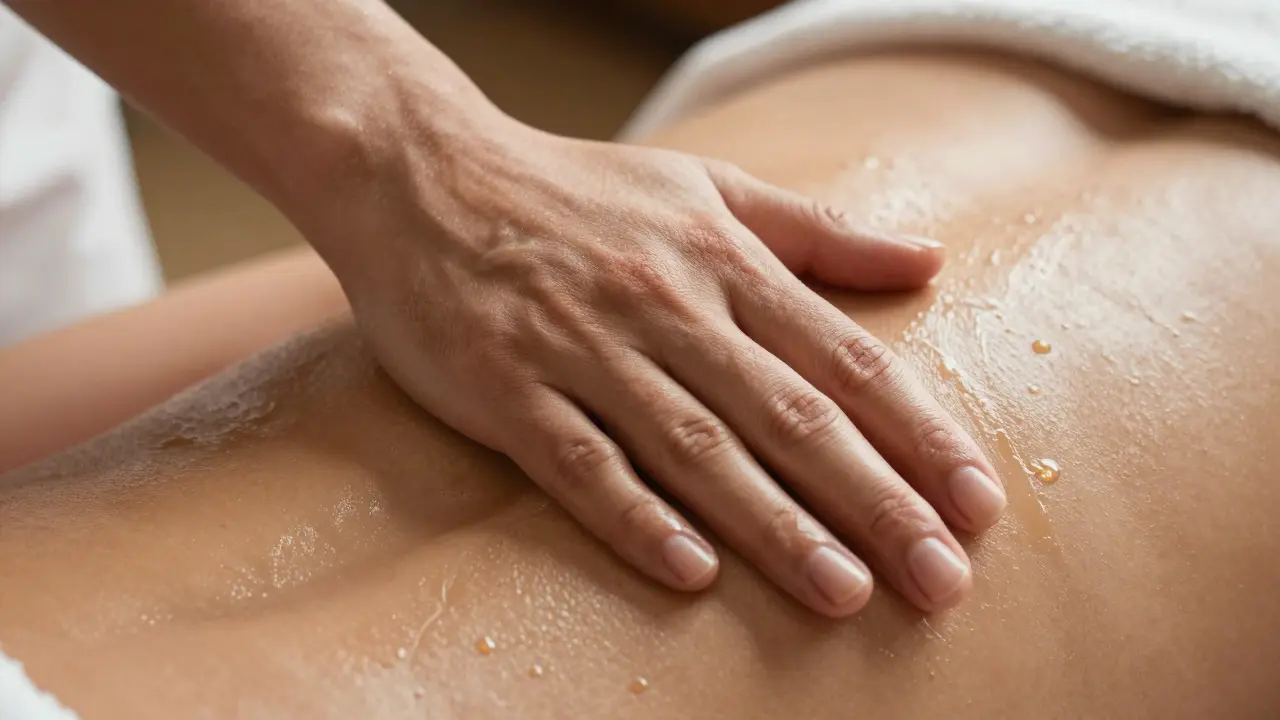
- Forearm Glides: The therapist uses the length of their forearm to cover large areas of the back and legs quickly and smoothly. This generates friction heat, which warms the tissues deeply without aggressive pressure.
- Elbow Pressure: For deeper work, the elbow is used sparingly to target trigger points. Because the elbow is smaller than a hand, it delivers focused pressure, but because it is supported by the arm, the pressure is steady and controlled, not jabbing.
- Foot Stomping (Hale Hana): In some traditional variations, the therapist may walk on the client's back or legs. This sounds intense, but it is done with careful balance and distributes weight evenly, providing a deep compression that releases fascia restrictions.
- Breath Synchronization: Many practitioners encourage you to breathe deeply, sometimes guiding your inhales and exhales to match the rhythm of their strokes. This conscious breathing enhances the parasympathetic response, lowering heart rate and cortisol levels.
The environment also plays a crucial role. Sessions are often accompanied by soft Hawaiian music, such as ukulele or chanting, and the room is kept warm. Oils infused with local botanicals like kukui nut oil or coconut oil are commonly used to facilitate the smooth gliding motion.
Health Benefits Beyond Relaxation
While relaxation is the most obvious benefit, Lomi Lomi offers physiological changes that extend well beyond the treatment table. Research into manual therapy suggests that the type of sustained, rhythmic pressure used in Lomi Lomi can significantly impact the autonomic nervous system.
One major advantage is the improvement of lymphatic drainage. The long, directional strokes follow the natural pathways of the lymphatic system, helping to move fluid and waste products out of tissues. This can reduce swelling and boost immune function. For athletes or active individuals, this means faster recovery times after intense workouts.
Emotional release is another powerful outcome. Because Lomi Lomi encourages a meditative state, many clients report crying or laughing unexpectedly during sessions. This is not unusual; the body often stores trauma and stress in the fascia and muscles. As the physical tension melts away, emotional barriers can loosen too. Therapists trained in Lomi Lomi are skilled at holding space for these moments, ensuring you feel safe and supported.
Additionally, the warming effect of the friction generated by forearm strokes increases blood circulation. Better circulation means more oxygen and nutrients reach your cells, promoting tissue repair and reducing stiffness. People with chronic conditions like arthritis or fibromyalgia often find that Lomi Lomi provides longer-lasting relief compared to shorter, sharper modalities.
| Feature | Lomi Lomi | Swedish Massage | Deep Tissue Massage |
|---|---|---|---|
| Primary Tool | Forearms, Elbows, Palms | Hands, Fingers | Thumbs, Knuckles, Elbows |
| Pressure Level | Moderate to Deep (Fluid) | Light to Moderate | Deep, Intense |
| Stroke Style | Continuous, Flowing | Segmented, Discrete | Focused, Static |
| Best For | Stress Relief, Emotional Balance, Full-Body Harmony | General Relaxation, First-Time Clients | Chronic Pain, Specific Knots, Athletic Recovery |
| Energy Focus | Holistic (Mind-Body-Spirit) | Physical Circulation | Muscular Structure |
Who Should Try Lomi Lomi?
Lomi Lomi is not for everyone, and understanding who benefits most can help you decide if it is right for you. It is particularly effective for people who suffer from high levels of mental stress or anxiety. The rhythmic nature of the massage acts as a form of moving meditation, quieting the chatter of the mind.
It is also ideal for those who dislike the "stop-and-start" nature of conventional massages. If you find yourself tensing up when a therapist pauses to reposition themselves, Lomi Lomi’s continuous flow will likely feel much more comforting.
People with chronic fatigue syndrome or autoimmune disorders often respond well to the gentle yet deep nature of the therapy. Because it does not rely on aggressive manipulation, it is less likely to cause the post-massage soreness associated with deep tissue work.
However, there are contraindications. If you have recently suffered a bone fracture, have open wounds, or are experiencing acute inflammation, you should wait until healed. The increased circulation can worsen acute injuries. Additionally, pregnant women should consult their doctor before trying Lomi Lomi, especially if foot stomping or intense abdominal pressure is involved, though modified versions exist for prenatal care.

How to Find a Qualified Practitioner
With the growing popularity of holistic wellness, many spas now offer "Lomi Lomi" services. However, not all practitioners are trained in the traditional methods. Some may simply use the term to describe any massage that uses arms instead of hands. To ensure you get the authentic experience, look for specific credentials.
Ask about their training lineage. Did they study under a recognized Kahuna or complete a specialized course in Hawaiian massage traditions? Look for certifications from reputable institutions that emphasize cultural respect and proper technique. In Australia, for example, check if the therapist is registered with the Australian Natural Therapists Association (ANTA) or similar bodies that require ongoing education.
During your consultation, ask questions. A good practitioner will explain what to expect, discuss your health history, and adjust the pressure based on your feedback. They should also create a sacred space, respecting the spiritual roots of the practice. If the environment feels rushed or clinical, it might not be the right fit for this particular modality.
Preparing for Your Session
To get the most out of your Lomi Lomi experience, preparation is key. Avoid eating a heavy meal immediately before your appointment, as digestion can compete with the relaxation response. Hydrate well throughout the day, as the detoxification process can lead to mild dehydration afterward.
Wear comfortable clothing that is easy to remove. Most therapists provide sheets and towels for draping, so you will remain covered except for the area being worked on. Communicate openly about your preferences. Do you want music? Do you prefer silence? Are there areas you want them to avoid? Your comfort is paramount.
After the session, plan to rest. Do not schedule a busy meeting or intense workout immediately after. Allow your body to integrate the changes. Drink plenty of water to help flush out toxins released from the muscles. You may feel euphoric, tired, or emotionally sensitive-all normal reactions.
Integrating Lomi Lomi Into Your Wellness Routine
You do not need to visit a spa every week to benefit from these principles. While professional sessions are invaluable, you can incorporate elements of Lomi Lomi into your self-care routine. Use a foam roller or a massage ball to apply broad, gliding pressure along your back and legs. Focus on keeping the movement slow and continuous, matching your breath to the motion.
Partner massage is another option. Teach a loved one the basic forearm glide technique. It is a beautiful way to connect and share the gift of touch. Remember, the intention matters as much as the technique. Approach the practice with mindfulness and presence, and you will begin to see the transformative power of Aloha in your daily life.
Is Lomi Lomi painful?
Generally, no. Lomi Lomi is designed to be soothing and relaxing. While it can involve deep pressure, especially with elbows, the strokes are smooth and continuous, which reduces the sensation of pain. However, if you have very tight muscles, you might feel some initial discomfort as tension releases, but it should never be sharp or unbearable. Always communicate with your therapist to adjust the pressure.
How often should I get a Lomi Lomi massage?
For general wellness and stress management, once a month is a good starting point. If you are dealing with chronic pain or high anxiety, weekly or bi-weekly sessions may be more beneficial initially. Listen to your body; some people find they need more frequent touch to maintain balance, while others thrive with occasional treatments.
Can Lomi Lomi help with insomnia?
Yes, many clients report improved sleep quality after Lomi Lomi sessions. The deep relaxation and activation of the parasympathetic nervous system help lower cortisol levels, making it easier to fall asleep and stay asleep. The rhythmic nature of the massage can also serve as a cue for your brain to associate touch with rest.
What is the difference between Lomi Lomi and Shiatsu?
While both are holistic practices, Shiatsu is Japanese and focuses on applying static pressure to specific acupressure points along meridians. Lomi Lomi is Hawaiian and emphasizes continuous, flowing movement over the entire body. Shiatsu is often done on a mat with clothes on, while Lomi Lomi is typically done on a table with oils.
Is Lomi Lomi suitable for men?
Absolutely. Lomi Lomi is gender-neutral and beneficial for anyone seeking stress relief and physical balance. Men often appreciate the deep tissue aspects and the athletic recovery benefits. The focus on energy flow and relaxation transcends gender stereotypes, offering a profound sense of well-being for all.



About Author