
Experience the Healing Power of Hellerwork: How Structural Integration Restores Movement and Reduces Chronic Pain
Most people think of massage as something that relaxes muscles. But what if your pain isn’t just in your muscles-it’s in the way your whole body is stacked? That’s where Hellerwork comes in. It’s not just another massage. It’s a deep, systematic process that rewires how your body moves, stands, and breathes. Developed in the 1970s by structural integrator Joseph Heller, it combines deep tissue work, movement education, and conscious dialogue to fix the root cause of chronic tension-not just the symptoms.
What Exactly Is Hellerwork?
Hellerwork is a form of structural integration. That means it doesn’t treat isolated aches. It looks at your entire body as a system of connected tissues-muscles, fascia, tendons, and ligaments-that have been pulled out of balance over time. Think of it like a crooked building. You don’t fix the leaning wall by just propping it up. You need to re-level the foundation. Hellerwork does that for your body.
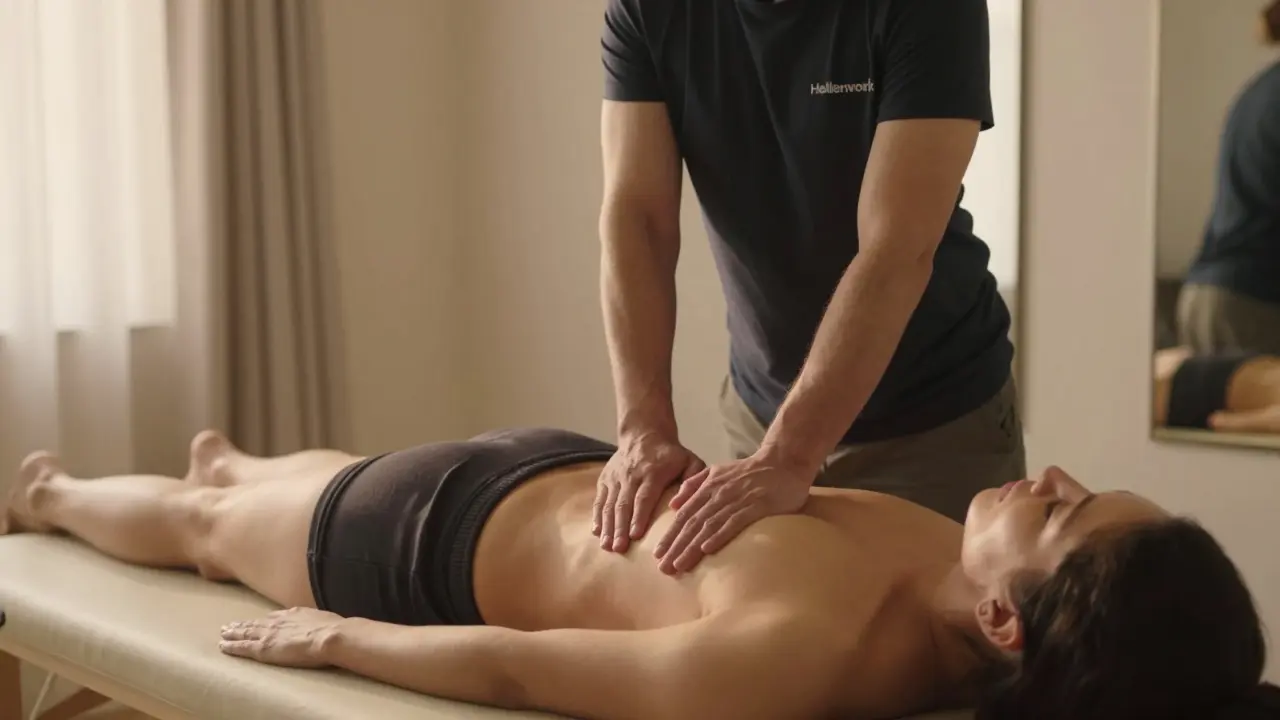
The process usually takes 11 sessions, each about 75 to 90 minutes long. Each session targets a specific area: feet, legs, hips, spine, shoulders, neck, head. The practitioner uses deep, slow pressure to release layers of chronic tension in the fascia-the connective tissue that wraps around every muscle and organ. Unlike a sports massage that feels intense but temporary, Hellerwork changes how your body holds itself long after the session ends.
What makes it different from Rolfing? They’re cousins. Rolfing was Heller’s original training ground. But Heller added two key pieces: movement re-education and verbal awareness. You don’t just lie there. You stand, walk, bend, and breathe with guidance. You learn why you slouch, why your hip twists, why you hold your breath when stressed. That awareness becomes part of your daily life.
How It Feels-And Why It Works
People often describe the first few sessions as uncomfortable. Not pain, exactly. More like a deep, burning pressure that makes you want to gasp. That’s the fascia releasing. Fascia is sticky. When you sit at a desk for years, it gets glued into place. Hellerwork gently peels those layers apart.
After session three or four, most clients notice something surprising: their posture changes without trying. Shoulders drop. Hips feel level. Breathing gets deeper. One woman in Perth, a 52-year-old teacher with lower back pain for 15 years, told me she stopped using her cane after session six. Not because the pain vanished overnight-but because her body finally knew how to carry itself again.
The science backs this up. Studies from the University of California and the Institute for Structural Integration show that Hellerwork improves spinal alignment, increases joint range of motion, and reduces cortisol levels-the stress hormone tied to chronic tension. It doesn’t just relax muscles. It resets your nervous system. Your body stops thinking it’s under threat. That’s why people report not just less pain, but more energy, better sleep, and even improved mood.
Who Benefits Most From Hellerwork?
Hellerwork isn’t for everyone. But if you’ve tried everything else and still feel stuck, it might be your answer.
- You have chronic back, neck, or shoulder pain that massage, physio, or chiropractic care didn’t fix
- You feel stiff, awkward, or uncoordinated-like your body doesn’t move the way it should
- You’ve had injuries (sports, car accidents, falls) and your body never fully recovered
- You’re an athlete, dancer, or performer who wants to move with more ease and power
- You feel emotionally tense, and you suspect your body is holding onto old stress
It’s not a quick fix. If you want a one-time treatment for soreness, go get a Swedish massage. Hellerwork is a journey. It asks you to pay attention-to your breath, your posture, your habits. But the changes stick. One man I worked with in Fremantle had sciatica for eight years. After Hellerwork, he started hiking again. At 68.
The Three Pillars of Hellerwork
There’s no magic wand here. The transformation comes from three working parts:
- Deep Tissue Bodywork - This is the physical layer. Practitioners use elbows, knuckles, and forearms to apply slow, sustained pressure. It’s not about breaking knots. It’s about inviting tissues to soften and realign. Sessions often feel like a slow release, not a shock.
- Movement Education - After each bodywork session, you do simple movements: walking across the room, bending to pick something up, turning your head. The practitioner watches how you move and shows you where you’re compensating. You learn to move with less effort. This is where real change happens.
- Verbal Awareness - You talk. About your life, your habits, your emotions. Why do you hunch when you’re anxious? Why do you clench your jaw when you’re tired? The body holds memories. Talking helps release them. This part is often the most surprising-and the most healing.
These three elements work together. You can’t fix posture without changing how you move. You can’t change movement without understanding why you do it. And you can’t understand why you do it without talking about what’s holding you back.

What to Expect in Your First Session
Your first session starts with a conversation. The practitioner asks about your medical history, injuries, daily routines, and what you hope to change. Then you stand, sit, and walk while they observe your alignment. They might take photos-yes, really-to track progress.
The bodywork part begins. You’ll be asked to wear underwear or comfortable shorts and a tank top. No oil, no lotion. The touch is firm, focused, and slow. You might feel warmth, tingling, or even emotional release. That’s normal. Some people cry. Others laugh. Your body is letting go of long-held patterns.
After the bodywork, you’ll do a few movement exercises. The practitioner might say: “Try walking like your feet are glued to the floor.” Or: “Let your head float up like a balloon.” These aren’t exercises. They’re invitations-to notice, to shift, to feel.
How It Compares to Other Therapies
| Therapy | Focus | Duration | Changes Last | Requires Active Participation |
|---|---|---|---|---|
| Hellerwork | Whole-body alignment and movement patterns | 11 sessions over weeks/months | Years, if maintained | Yes |
| Massage Therapy | Muscle relaxation and circulation | Single or occasional sessions | Hours to days | No |
| Chiropractic | Joint alignment, especially spine | Regular adjustments | Days to weeks | Minimal |
| Physical Therapy | Rehabilitation after injury | Weeks to months | Months, if exercises continued | Yes |
| Rolfing | Fascial realignment | 10 sessions | Years | Some |
Hellerwork stands out because it doesn’t just treat symptoms. It rebuilds your body’s blueprint. Unlike chiropractic, which moves bones, Hellerwork moves the tissue that holds bones in place. Unlike physical therapy, which focuses on rehab, Hellerwork focuses on prevention. And unlike Rolfing, it doesn’t skip the mind-body connection.
Real Results, Real People
One client, a 40-year-old software developer from Subiaco, came in with migraines and tight shoulders. He’d tried acupuncture, yoga, and painkillers. Nothing stuck. After six Hellerwork sessions, his headaches dropped from five times a week to once a month. He started standing up straight at his desk. He noticed he wasn’t holding his breath anymore. “I didn’t realize I was holding my breath until I stopped doing it,” he told me.
Another client, a retired ballet dancer with hip arthritis, started Hellerwork to reduce pain. After the series, she didn’t just walk better-she started dancing again, slowly, at home. “My body remembered how to move,” she said. “It wasn’t gone. It was buried.”

Is Hellerwork Right for You?
It’s not cheap. Sessions usually cost between $150 and $220 in Australia. The full series adds up. But if you’ve spent thousands on temporary fixes, it’s an investment in your long-term freedom.
It’s not for people who want quick results. If you need relief tomorrow, this isn’t it. But if you’re tired of chasing pain, if you’re ready to understand why your body feels the way it does, then Hellerwork gives you more than relief-it gives you back your body.
It’s not a miracle. But it’s one of the few therapies that actually changes how your body works-not just how it feels.
Where to Find a Certified Hellerwork Practitioner
Not every massage therapist does Hellerwork. It’s a specialized training. Look for practitioners certified by the Hellerwork Structural Integration Association or the International Association of Structural Integrators. In Australia, certified practitioners are listed in Perth, Melbourne, Sydney, and Brisbane. Ask if they’ve completed the full 11-session curriculum. Some offer shorter packages-but the full series is where the real transformation happens.
Start with a consultation. Most practitioners offer a free 20-minute chat. Ask: “What’s your approach to movement education?” and “How do you help clients integrate changes into daily life?” If they don’t mention movement or awareness, keep looking.
Is Hellerwork painful?
It can be intense, but not sharp or damaging. The pressure is deep and slow, like a slow release of tension. Most people describe it as a burning or deep ache that turns into relief. Practitioners work with your breathing and comfort level-you’re always in control.
How long do the results last?
Results can last years if you stay aware of your posture and movement. Many clients return for a “tune-up” every 6 to 12 months. The changes are structural, not temporary. Your body learns new patterns and keeps them.
Can Hellerwork help with anxiety?
Yes. Chronic tension often holds emotional stress. As fascia releases, people report feeling calmer, more grounded, and less reactive. The verbal awareness component helps connect physical sensations to emotional patterns, which can be deeply healing.
Do I need to be fit to try Hellerwork?
No. People of all ages and fitness levels benefit. The work is adapted to your body’s current state. Whether you’re 20 or 80, stiff or flexible, the goal is to restore natural alignment-not to meet a fitness standard.
Can I do Hellerwork if I’ve had surgery?
Yes, but you’ll need clearance from your doctor. Practitioners avoid direct work on surgical scars until they’re fully healed (usually 6-12 months). Once healed, Hellerwork can help reduce scar tissue adhesions and restore movement around the area.
Next Steps: What to Do Now
If you’ve read this far, you’re probably wondering if this could help you. Start small. Book a consultation. Don’t commit to the full series yet. See how you feel after one session. Pay attention to how you stand, breathe, and move the next day. If you notice even a small shift-your shoulders feeling lighter, your breath deeper-that’s the beginning.
Hellerwork doesn’t promise to fix everything. But it gives you back the quiet, steady sense that your body is working for you-not against you. And in a world full of quick fixes, that’s rare. That’s healing.



About Author

Popular Posts