Trigger Point Massage: A Solution to Chronic Pain
If you’ve been living with nagging pain in your neck, shoulders, or lower back that won’t go away no matter how much you stretch or rest, you’re not alone. Millions of people deal with chronic pain that doesn’t respond to typical treatments like rest, ice, or even painkillers. One overlooked solution? Trigger point massage. It’s not magic, but it works - and you don’t need a therapist to start.
What Exactly Is a Trigger Point?
A trigger point is a tight, sensitive spot in a muscle that hurts when pressed and can refer pain to other areas. Think of it like a knot in a rope - it’s not just a lump, it’s a dysfunctional zone that sends out pain signals. These aren’t just muscle spasms. They’re areas where muscle fibers have locked into a contracted state due to injury, overuse, or poor posture. Common ones show up in the trapezius (upper back), iliotibial band (outer thigh), and calf muscles.
Unlike general soreness from a workout, trigger point pain doesn’t fade after a day or two. It sticks around. You might feel it as a dull ache, sharp sting, or even tingling down your arm. Many people mistake it for arthritis, sciatica, or tension headaches - but the real culprit is often a hidden knot in a muscle.
Why Trigger Point Massage Works
Trigger point massage isn’t just pressing hard on a sore spot. It’s about applying steady, focused pressure to break up the stuck muscle fibers and restore normal blood flow. When a muscle stays tight for too long, circulation drops. That means less oxygen and fewer nutrients get in, and waste products like lactic acid build up. This creates a cycle: tightness → pain → more tightness.
Massage breaks that cycle. By holding pressure on the trigger point for 30 to 60 seconds, you signal the muscle to relax. It’s like resetting a faulty switch. Studies from the Journal of Orthopaedic & Sports Physical Therapy show that consistent trigger point therapy reduces pain intensity by over 50% in chronic cases within four weeks.
The best part? You can do it yourself. No need for expensive sessions - though professional help helps.
How to Do Trigger Point Massage at Home
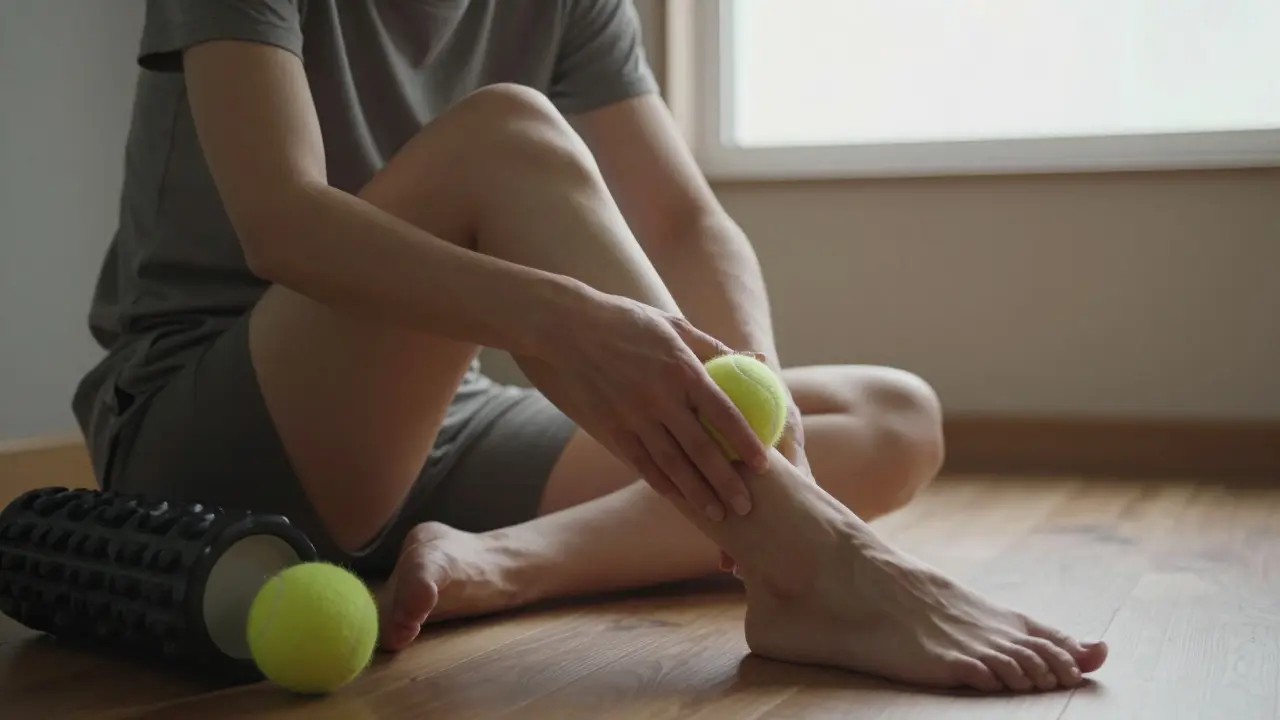
You don’t need fancy tools. A tennis ball, foam roller, or even your fingers can work. Here’s how to get started:
- Find the tender spot. Use your fingers to press around the painful area. When you hit a spot that makes you wince, you’ve found it.
- Apply steady pressure. Don’t jab or bounce. Hold the pressure for at least 30 seconds. You should feel the pain ease slightly as you hold it.
- Breathe. Holding your breath makes muscles tense more. Breathe deeply while you press.
- Move slowly. If the knot is large, slowly roll over it with a ball or roller. Don’t rush. Ten minutes a day is enough.
- Follow up with gentle stretching. After massaging, stretch the muscle for 20-30 seconds. This helps lock in the relaxation.
For neck pain: Lean your head against a wall and press a tennis ball between your shoulder blade and spine. For lower back: Sit on a foam roller and roll slowly side to side. For calves: Sit on the floor, place a lacrosse ball under your calf, and roll it up and down.

What Happens When You Ignore Trigger Points?
Ignoring them doesn’t make them go away. It makes them worse. Over time, trigger points can cause your body to compensate. You start favoring one side, shifting your posture, or walking differently. That leads to new pain elsewhere - a sore knee from an old shoulder knot, or headaches from tight neck muscles.
Chronic trigger points also mess with your nervous system. They keep sending pain signals even when there’s no injury. This is called central sensitization. It’s why some people feel pain even when nothing’s wrong. The body gets stuck in pain mode.
Left untreated, trigger point pain can lead to reduced mobility, poor sleep, and even anxiety. It’s not just physical - it takes a mental toll.
Trigger Point Massage vs. Other Therapies
People often compare trigger point massage to other treatments. Here’s how it stacks up:
| Method | Effectiveness for Trigger Points | Cost | Time to Relief | Self-Applicable? |
|---|---|---|---|---|
| Trigger Point Massage | High | Low to None | Days to weeks | Yes |
| Physical Therapy | Medium to High | High | Weeks | Partially |
| Chiropractic Adjustment | Low | High | Variable | No |
| Acupuncture | Medium | Medium | Weeks | No |
| Painkillers | Low | Low | Hours | Yes |
Trigger point massage wins because it targets the root cause - not just the symptom. Painkillers mask pain but don’t fix the knot. Physical therapy helps, but often focuses on movement patterns, not localized muscle issues. Chiropractic adjustments may help alignment, but won’t release a tight band in your glute.
When to See a Professional
You can do a lot on your own. But if you’ve been massaging for two weeks with no improvement, or if the pain is spreading, radiating, or accompanied by numbness or weakness, it’s time to see someone. A licensed massage therapist trained in myofascial release or a physical therapist can go deeper, use more precise techniques, and rule out nerve issues.
Also, if you have conditions like osteoporosis, recent surgery, or blood clotting disorders, don’t self-treat without medical advice. Trigger point massage is safe for most, but not all.

Real-Life Results
One woman in Birmingham, 52, had shoulder pain for 18 months. Doctors said it was "tendonitis." She tried physio, injections, even acupuncture. Nothing stuck. Then she started using a foam roller on her upper back every night. Within three weeks, the pain dropped from a 7/10 to a 2/10. She now does it daily - no meds, no appointments.
A construction worker in Coventry had chronic lower back pain from lifting heavy tools. He started rolling his glutes with a lacrosse ball after work. Within a month, his pain went from daily to occasional. He says it’s the only thing that’s kept him working without painkillers.
These aren’t outliers. They’re common.
Common Mistakes to Avoid
Trigger point massage isn’t hard, but people mess it up. Here’s what not to do:
- Pressing too hard. You’re not trying to bruise yourself. Pain should be intense but manageable - like a "good hurt." If it makes you gasp, ease off.
- Doing it too fast. Rushing through 10 seconds won’t do anything. Hold the pressure. Let the muscle surrender.
- Only doing it once. This isn’t a one-time fix. Like brushing your teeth, you need consistency.
- Ignoring posture. If you’re slumped at your desk all day, you’ll keep recreating the knots. Massage helps, but posture fixes the cause.
- Using the wrong tool. A golf ball is too hard for beginners. A tennis ball or foam roller is better to start.
How to Make It Stick
Like any habit, trigger point massage works best when it’s routine. Try this:
- Do it right after a shower - muscles are warm and more pliable.
- Set a 10-minute timer. Use it as a daily wind-down ritual.
- Pair it with deep breathing or calming music.
- Track your pain level on a scale of 1-10 every 3 days. You’ll see the trend.
Most people give up after a few days because they don’t see instant results. But this isn’t a quick fix. It’s a reset. And it’s one of the few pain solutions that actually changes your body’s wiring over time.
Can trigger point massage cure chronic pain?
Trigger point massage doesn’t "cure" chronic pain, but it can eliminate the source of pain in many cases. If your pain comes from muscle knots, consistent massage can restore normal muscle function and stop the pain cycle. For pain caused by nerve damage, arthritis, or other conditions, it helps manage symptoms but won’t fix the root issue.
How often should I do trigger point massage?
Start with 5-10 minutes a day, 5 days a week. Once pain improves, reduce to 2-3 times a week for maintenance. If you’re still in pain, daily sessions are fine - just don’t overdo it on one spot. Listen to your body.
Is trigger point massage the same as deep tissue massage?
No. Deep tissue massage works on broader muscle layers and uses long strokes to release tension. Trigger point massage is focused - it targets one specific knot with sustained pressure. Think of deep tissue as a full-body reset, and trigger point as precision surgery.
Can I use a massage gun for trigger points?
Yes, but use it carefully. A massage gun vibrates, which can help loosen tissue, but it doesn’t hold pressure like manual massage. For best results, use the gun to warm up the area, then follow up with a ball or your fingers to hold pressure on the knot for a full minute.
Why does pressing on a knot relieve pain elsewhere?
Trigger points refer pain. That means a knot in your shoulder can make your head hurt, or a knot in your hip can cause knee pain. This happens because nerves from the knot connect to other areas in your spinal cord. When you release the knot, you cut off the false pain signal. It’s like unplugging a faulty wire.
Chronic pain doesn’t have to be your normal. Trigger point massage is one of the most underused tools we have - simple, cheap, and backed by science. You don’t need to wait for a therapist. Start today. Find the knot. Press. Breathe. Repeat.



About Author