
Rolfing Transformation: Real Results and How Structural Integration Works
What Exactly Is Happening in the Body
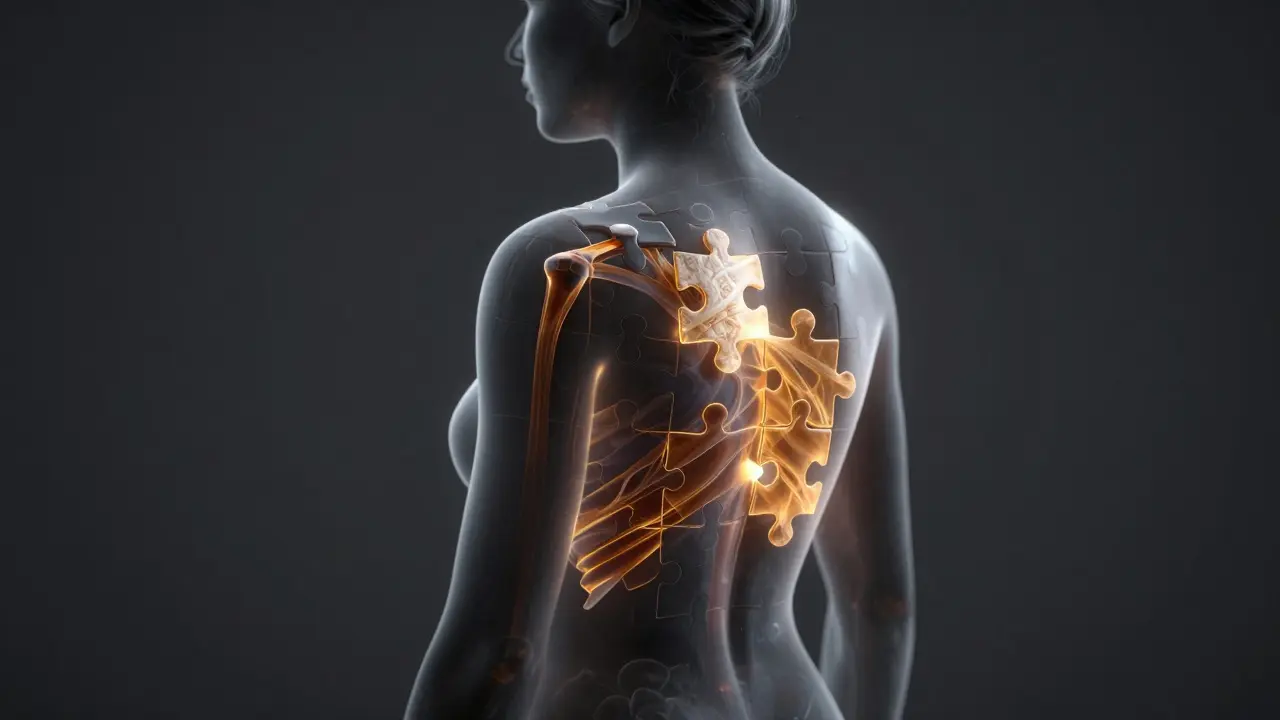
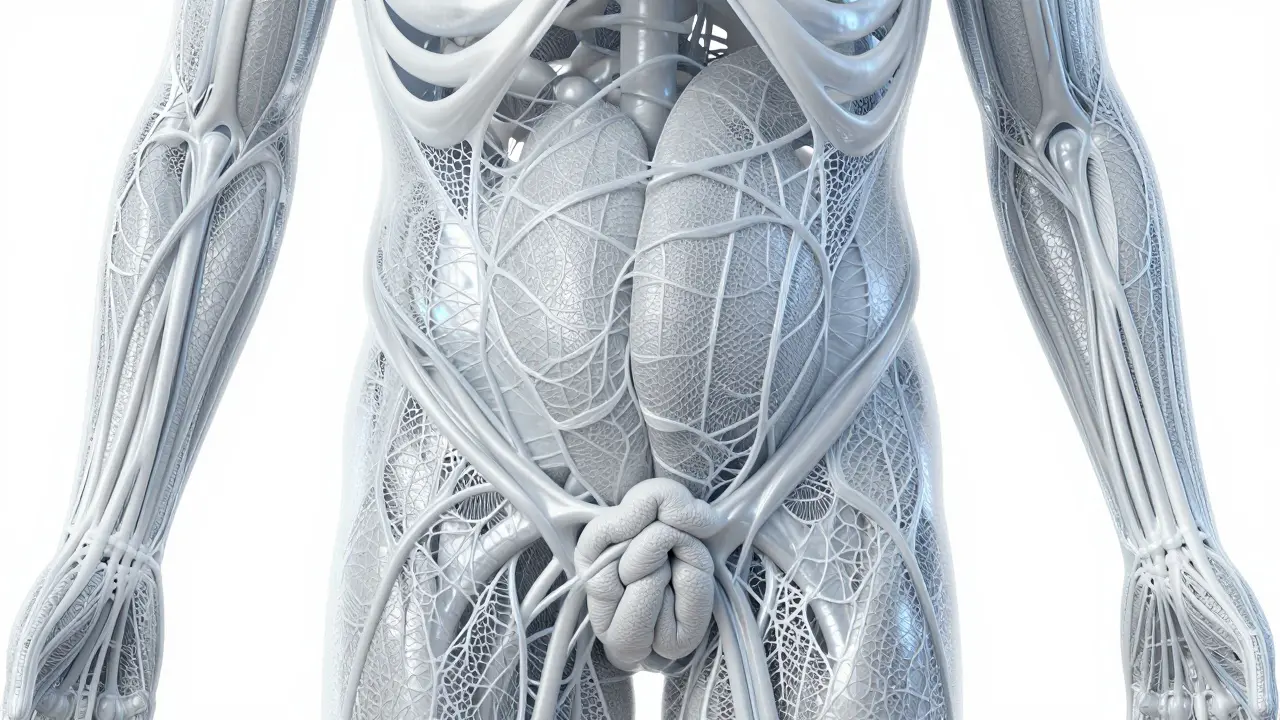
To understand why Sarah's experience was so different from a typical spa day, we have to look at the Fascia. Fascia is the dense web of connective tissue that wraps around every muscle, bone, and organ in your body. Think of it like a biological wetsuit. When it's healthy, it's slippery and flexible. But when you experience trauma, chronic stress, or decades of slouching over a laptop, this tissue thickens and hardens. It creates "adhesions"-basically internal knots that pull your skeleton out of alignment. Most therapies target the muscle. But if the fascia is pulling your shoulder up, the muscle is just reacting to that tension. Rolfing addresses the root cause by applying precise pressure to these connective tissues. By releasing the fascia, the body can settle back into its natural, balanced state. For Sarah, this meant her pelvis stopped tilting forward, which instantly relieved the pressure on her lumbar spine.The Ten-Series Process
Unlike a random massage, the classic approach to structural integration is a systematic journey known as the "Ten-Series." It's not a buffet where you pick and choose; it's a blueprint for the whole body. Each session has a specific goal, moving from the superficial layers of tissue to the deep core.- Sessions 1-3 (The Superficial Layers): These sessions focus on the "sleeve" of the body. The practitioner works on the chest, arms, and the outer layers of the legs to open up the breathing and basic movement.
- Sessions 4-7 (The Core): Here, the work goes deeper. It targets the inner thighs, the pelvis, and the deep muscles of the back. This is where the heavy lifting of alignment happens.
- Sessions 8-10 (Integration): The final phase isn't about fixing a specific part but weaving everything together. It ensures the new alignment sticks and the body moves as one fluid unit.
| Feature | Traditional Massage | Rolfing (Structural Integration) |
|---|---|---|
| Primary Target | Muscle tissue and relaxation | Fascia and skeletal alignment |
| Core Objective | Temporary pain relief / stress reduction | Long-term postural change and efficiency |
| Approach | Symptomatic (treats the area that hurts) | Holistic (treats the whole system) |
| Duration of Effect | Short-term (days) | Long-term (permanent structural change) |
Real-Life Shift: From Pain to Performance
When Sarah finished her Ten-Series, the transformation wasn't just physical. When your body is aligned, your nervous system changes. She reported feeling a sense of "lightness," as if she had shed a heavy coat. This is because her muscles were no longer fighting against her own fascia just to keep her upright. For someone dealing with Chronic Pain, this is a game-changer. When the skeletal system is stacked correctly, joints experience less wear and tear. In Sarah's case, the constant tug-of-war in her lower back stopped. Instead of spending her evenings with a heating pad, she started jogging again-something she had avoided for five years due to fear of injury. This process is closely related to Myofascial Release, but Rolfing is more focused on the global structure than just localized knots. While a therapist might use myofascial release to fix a frozen shoulder, a Rolfer looks at how that shoulder is connected to the opposite hip through the deep fascia lines.Who Should Consider This Approach
Not everyone needs a full ten-series, but certain people find it life-changing. If you've spent your life in a high-impact sport, or if you've had a major surgery that left you compensating with your posture, your fascia has likely adapted to those stresses. Consider this if you experience:- Chronic stiffness that doesn't respond to stretching.
- A feeling of being "collapsed" or unable to stand up straight.
- Recurrent injuries in the same spot (e.g., always spraining the same ankle).
- A history of postural imbalances like scoliosis or severe pelvic tilts.

Managing Expectations and Pitfalls
It is important to be honest about the experience: it can be intense. Because the practitioner is working with dense connective tissue, there is often a level of discomfort. However, this is a "productive" pain, unlike the sharp pain of an injury. It's the feeling of something finally giving way. One common mistake people make is stopping after two or three sessions. While you'll feel some relief, you're only treating the surface. To get the permanent shift Sarah experienced, you have to go through the deeper core work. Skipping to the end without doing the foundational layers is like trying to put a roof on a house before the walls are up. Another thing to watch for is the "healing crisis." After a session, you might feel exhausted or even slightly sore, as your body adjusts to its new position. This is normal. Your brain has spent years thinking that "crooked" was "straight," and it takes a moment to recalibrate the internal map of your body.The Connection to Modern Wellness
In an era of "tech neck," where we spend eight hours a day staring at screens, structural integration is becoming more relevant than ever. Our bodies are literally molding themselves to our devices. The forward-head posture doesn't just cause neck pain; it affects how we breathe and how our diaphragm functions. By integrating the body, we improve Proprioception-the sense of self-movement and body position. When Sarah finished her sessions, she wasn't just standing straighter; she was more aware of how she occupied space. This mindfulness often spills over into mental health, reducing anxiety because the body no longer feels like it's in a state of constant physical tension.Does Rolfing hurt?
It can be intense. Because the practitioner is working on dense fascia, you will feel significant pressure. However, the goal is never to cause injury. You should always communicate with your therapist to ensure the pressure is challenging but manageable.
How many sessions do I actually need?
The classic Ten-Series is designed as a complete cycle to address the whole body. While some people feel great after a few sessions, the full series is recommended for those seeking a permanent change in posture or chronic pain relief.
Is it different from deep tissue massage?
Yes. Deep tissue massage focuses on relaxing tight muscles. Rolfing targets the fascia (the wrapping around the muscle) to change the structural alignment of the skeleton. One is about relaxation; the other is about reorganization.
How long do the results last?
When done correctly, the results are long-lasting because you've changed the physical structure of your connective tissue. However, maintaining good habits-like ergonomics and movement-will prevent the fascia from tightening up again over the years.
Can Rolfing help with scoliosis?
While it cannot "cure" a genetic or bone-based curvature of the spine, it can significantly reduce the pain associated with scoliosis by releasing the muscular and fascial tension that pulls the spine further out of alignment.


About Author

Popular Posts



Shiatsu Massage: Balancing Energy Naturally