

Prenatal Massage: A Safe Guide to Relief During Pregnancy
You’re seven months along. Your lower back feels like it’s been replaced with a rusty hinge, your ankles are swelling into something resembling balloons, and sleeping has become an Olympic sport where the only prize is waking up sore. Sound familiar? You aren’t alone. Roughly prenatal massage is sought by over 60% of pregnant women in the US for symptom management. But here’s the thing: most people think massage during pregnancy is just a luxury spa day. It’s not. It’s a targeted therapeutic intervention that can actually change how you experience these nine months.
Let’s cut through the noise. You don’t need a fancy resort or a $200 gift card to get results. You need to understand what’s happening to your body, which types of touch are safe, and how to communicate effectively with your therapist so you don’t end up lying face-down on a table when you clearly shouldn’t be. This guide breaks down exactly how to transform your pregnancy experience from a endurance test into something manageable-even enjoyable.
Why Your Body Actually Needs Touch Right Now
Pregnancy isn’t just about a growing baby; it’s a systemic overhaul. Your center of gravity shifts forward, forcing your spine into an exaggerated curve called lordosis. Simultaneously, your body releases relaxin, a hormone designed to loosen ligaments for birth but which also makes your joints unstable. The result? Muscle tension skyrockets as your body tries to compensate for this instability.
Cortisol, the primary stress hormone, often runs high during pregnancy due to physical discomfort and emotional anxiety. High cortisol levels have been linked to preterm labor and low birth weight. Here is where the science gets interesting. Studies published in the International Journal of Neuroscience have shown that regular massage therapy can reduce cortisol levels by up to 53% while increasing serotonin and dopamine-the "feel-good" neurotransmitters-by significant margins. This isn’t placebo effect magic; it’s physiological regulation. When you lower stress hormones, you improve blood flow, which helps deliver oxygen and nutrients to both you and the baby.
Beyond the chemical shift, there’s the mechanical reality. Swelling (edema) happens because increased blood volume puts pressure on veins, particularly in the legs. Gentle lymphatic drainage techniques used in professional prenatal massage help move that fluid out of tissues and back into circulation. If you’ve ever felt your rings cutting off circulation or your shoes refusing to close, this is the mechanism at work.
Safety First: Trimester Rules and Contraindications
Can you get a massage anytime? Technically, yes, but practically, it depends on your health history and trimester. Most therapists recommend waiting until the second trimester (week 13+) for your first session. Why? The first trimester carries the highest risk of miscarriage, and while massage doesn’t cause miscarriage, many providers prefer to avoid liability and ensure the fetus is stable before beginning treatment.
Positioning is critical. In the second and third trimesters, you cannot lie flat on your stomach. It’s physically impossible after a certain point, and lying flat on your back (supine position) can compress the inferior vena cava, a major vein that returns blood from your lower body to your heart. Compression here can cause dizziness, nausea, and reduced blood flow to the placenta. This is why side-lying positions are the gold standard.
| Trimester | Recommended Position | Key Focus Areas | Precautions |
|---|---|---|---|
| First (Weeks 1-12) | Side-lying or Semi-Reclined | Gentle relaxation, foot massage | Avoid deep tissue; check for bleeding risks |
| Second (Weeks 13-27) | Side-lying with bolsters | Lower back, hips, shoulders | Monitor blood pressure; avoid ankle acupressure points |
| Third (Weeks 28-Birth) | Strict Side-Lying | Legs, feet, upper back | Avoid deep abdominal pressure; watch for Braxton Hicks |
There are specific conditions where you should skip the appointment entirely. If you have preeclampsia (high blood pressure with protein in urine), uncontrolled diabetes, severe varicose veins, or a history of premature labor, consult your OB-GYN first. Also, be wary of essential oils. While lavender is generally safe, oils like rosemary, clary sage, and jasmine can stimulate uterine contractions. Always ask your therapist if they use pregnancy-safe blends.
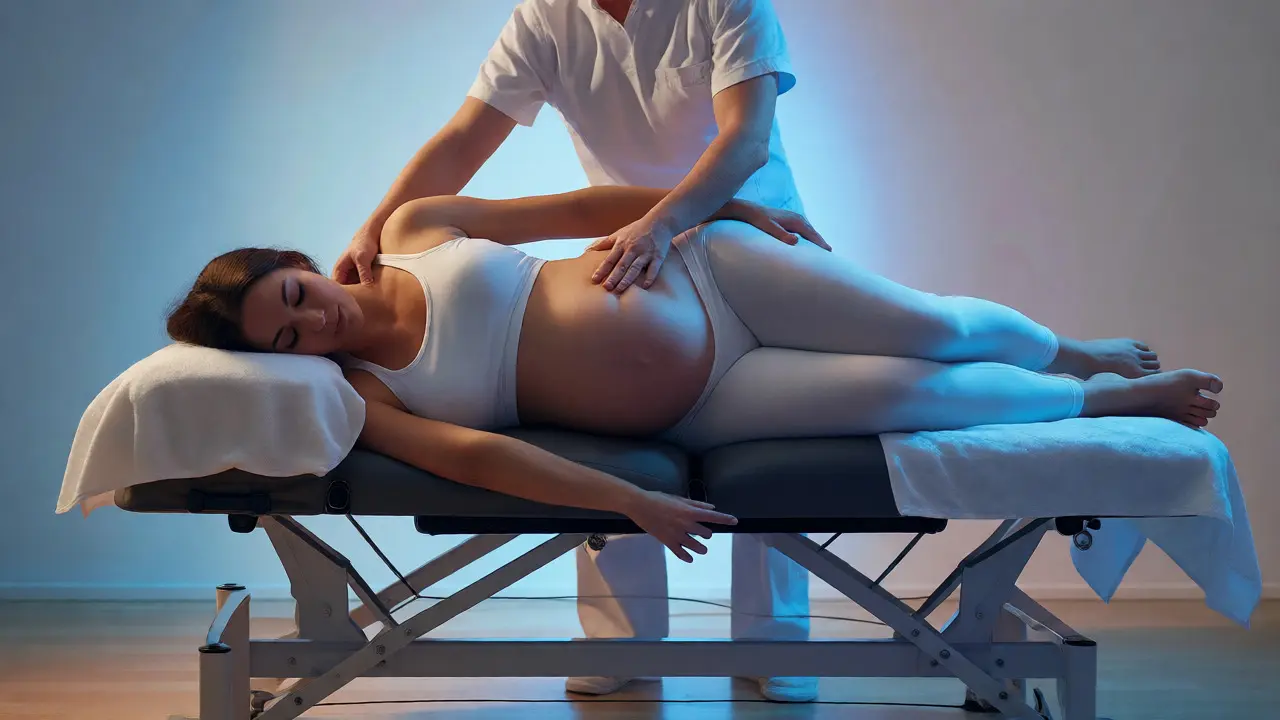
The Toolbox: Techniques That Actually Work
Not all massages are created equal. Swedish massage is great for general relaxation, but it might not target the specific pain points of pregnancy. You want a therapist trained in prenatal-specific modalities. Here’s what to look for:
- Swedish Massage: Uses long, gliding strokes to improve circulation and reduce muscle tension. Ideal for overall relaxation and mild pain.
- Deep Tissue Massage: Targets deeper layers of muscle and fascia. Useful for chronic back pain, but must be modified for pregnancy. Never let a therapist dig into your abdomen or lower back without support.
- Myofascial Release: Focuses on releasing tightness in the connective tissue (fascia). This is highly effective for hip pain and sciatica, common complaints in the third trimester.
- Reflexology: Applies pressure to specific points on the feet and hands believed to correspond to organs. Some studies suggest it may help induce labor when used near the due date, so avoid intense reflexology early in pregnancy.
Sciatica deserves special mention. About 50% of pregnant women experience sciatic nerve pain, caused by the uterus pressing on the nerve or piriformis muscle spasms. Myofascial release around the glutes and hips provides more lasting relief than simple rubbing. If your therapist starts working on your buttocks, expect some discomfort-it’s working on the root cause, not just the symptom.
Finding the Right Therapist: Questions to Ask
Your doctor clears you for exercise, but does your massage therapist know what they’re doing? Many licensed massage therapists take a weekend course and call themselves "certified." That’s not enough. Look for certification from organizations like the American Massage Therapy Association (AMTA) or specialized training programs such as those offered by the National Certification Board for Therapeutic Massage & Bodywork (NCBTMB).
Before booking, send this email:
- Do you have specific training in prenatal massage?
- What equipment do you use? (Look for a dedicated prenatal table with cutouts for belly and chest, or ample bolster systems.)
- How do you handle positioning for side-lying clients?
- Are your oils fragrance-free or specifically formulated for pregnancy?
If they hesitate on question one or two, keep looking. A proper prenatal table costs several thousand dollars. If they’re using a standard table with pillows, they might not be fully equipped for late-stage pregnancies. Also, observe their communication style. They should ask about your pain levels, energy, and mood before starting. If they rush in and start kneading without checking in, that’s a red flag.

DIY Support: What You Can Do Between Sessions
Professional sessions are powerful, but they happen once a week or bi-weekly. You live with the pain every day. So, what can you do at home? First, invest in a pregnancy pillow. Not the cheap foam ones that flatten in a week, but a supportive U-shaped or C-shaped pillow that keeps your hips aligned while you sleep. Misaligned hips overnight undo much of the good a daytime massage achieves.
Self-massage tools can help too. A tennis ball against the wall can target trigger points in your upper back. Stand with your back to a wall, place the ball between your shoulder blade and spine, and lean gently. Avoid the lower lumbar region unless guided by a pro. For feet, a frozen water bottle rolled under the arch reduces inflammation from standing all day.
Hydration is non-negotiable. Massage releases metabolic waste products from muscles into your bloodstream. Without enough water, you might feel nauseous or get a headache afterward-a phenomenon often called a "massage hangover." Drink at least 16 ounces of water immediately after your session, and continue sipping throughout the day.
Emotional Benefits: More Than Just Physical Relief
We talk a lot about backs and legs, but let’s address the mental load. Pregnancy can feel isolating. Your body changes rapidly, your identity shifts, and anxiety about labor looms large. Massage provides a rare moment where someone else takes care of your physical needs. This act of nurturing lowers psychological stress significantly.
Many women report improved sleep quality after consistent massage. Better sleep means better emotional regulation. It’s a cycle: less pain leads to better rest, which leads to lower irritability, which improves relationships with partners and older children. One study in the Journal of Clinical Psychology found that women who received regular prenatal massage reported higher satisfaction with their pregnancy experience and lower rates of postpartum depression symptoms.
Partner participation matters too. If your partner learns basic neck and shoulder techniques, it becomes a bonding ritual. Teach them to avoid the ankles (to prevent accidental stimulation of contraction points) and focus on gentle, slow strokes. This shared responsibility alleviates the feeling that pregnancy is "your job" alone.
Is it safe to get a prenatal massage in the first trimester?
Yes, generally speaking, it is safe for most healthy pregnancies. However, many therapists prefer to wait until the second trimester due to the higher natural risk of miscarriage in the first 12 weeks. If you choose to go early, ensure your therapist knows you are in the first trimester so they can use lighter pressure and avoid specific acupressure points on the ankles and wrists that are traditionally thought to influence uterine tone.
Can prenatal massage induce labor?
There is anecdotal evidence and some small studies suggesting that certain techniques, particularly reflexology focusing on the ankles and sacral area, may help ripen the cervix or encourage labor when performed near the due date. However, routine prenatal massage earlier in pregnancy is unlikely to trigger early labor. Always inform your therapist if you are past 37 weeks so they can adjust techniques accordingly.
How often should I get a prenatal massage?
For general wellness and mild discomfort, once a month is sufficient. If you are experiencing significant pain, edema, or high stress levels, weekly or bi-weekly sessions are often recommended. Listen to your body; if you feel sore or overly fatigued after a session, extend the time between appointments.
What should I wear during the appointment?
Most therapists provide draping sheets, so you will likely undress to your comfort level, usually leaving underwear on or removing it depending on whether they are massaging the glutes. Wear loose, comfortable clothing to and from the appointment. If you are sensitive to being naked, bring your own comfortable leggings and a sports bra to wear during the session, though this limits access to certain areas.
Are essential oils safe during pregnancy?
Not all are. Lavender, chamomile, and lemon are generally considered safe in diluted amounts. Avoid rosemary, clary sage, jasmine, and cinnamon, especially in the first trimester, as they may stimulate the uterus. Always ask your therapist to use unscented lotion or oil if you are unsure, or request a patch test if you have sensitive skin.



About Author

Popular Posts