
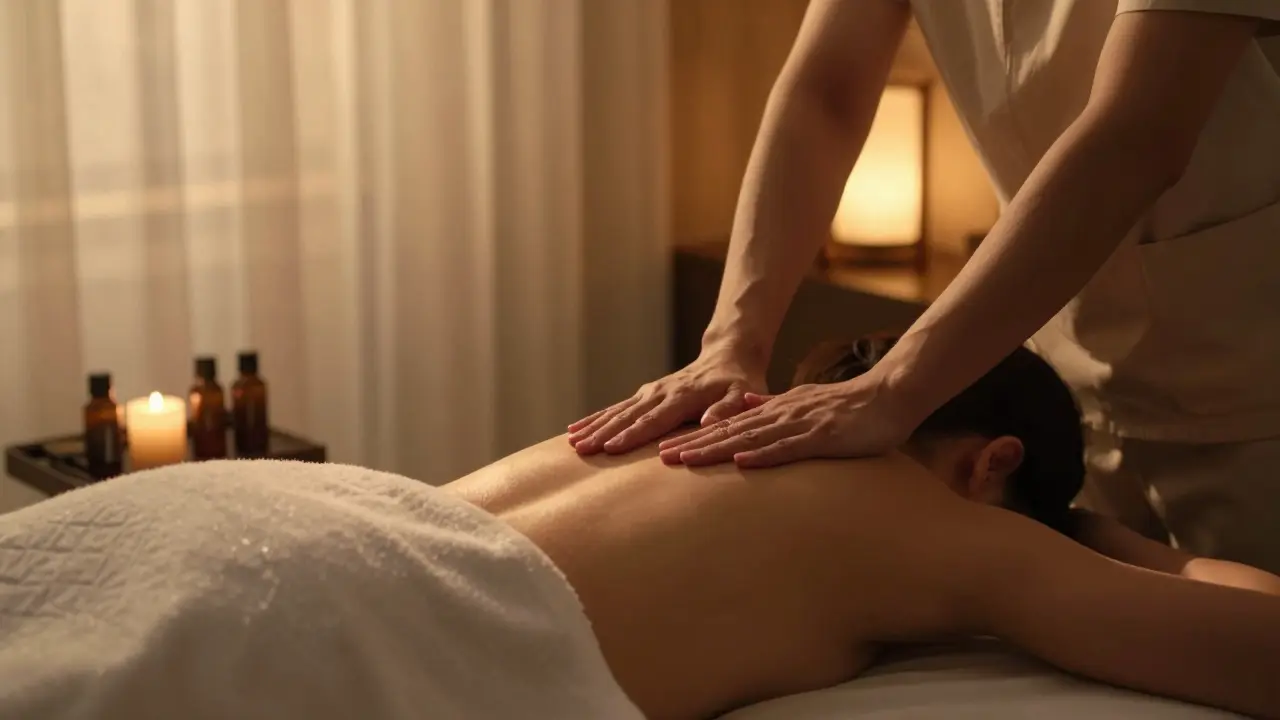
Swedish Massage: The Art of Healing and Relaxation
Most people think of Swedish massage as just a nice, gentle rubdown. But if you’ve ever felt the slow, rhythmic pressure of long strokes gliding over your back, or the way your shoulders finally dropped after weeks of tension, you know it’s more than that. Swedish massage isn’t just about feeling good for an hour-it’s a proven way to reset your nervous system, ease chronic pain, and bring your body back into balance.
What Makes Swedish Massage Different?
Swedish massage is the foundation of most Western massage techniques. It’s not the deep, bone-cracking pressure of deep tissue, nor the intense focus of sports massage. Instead, it uses five core movements-effleurage, petrissage, friction, tapotement, and vibration-applied with consistent, flowing pressure. These aren’t random motions. Each one serves a purpose.
Effleurage, the long, gliding strokes, warms up the muscles and increases blood flow. Petrissage, the kneading motions, helps release knots and move trapped fluids. Friction digs deeper into muscle layers without causing pain. Tapotement, the light tapping or cupping, wakes up sluggish tissue. And vibration, the trembling motion, calms the nervous system. Together, they create a rhythm your body recognizes as safety.
Unlike other styles, Swedish massage doesn’t aim to fix injuries. It’s designed to restore harmony. A 2021 study in the Journal of Clinical Massage Therapy found that participants who received weekly Swedish massages for six weeks reported a 43% drop in cortisol levels-the main stress hormone-and a 38% improvement in sleep quality. That’s not magic. It’s physiology.
How It Actually Heals Your Body
When you’re stressed, your muscles tighten. Your breathing gets shallow. Your circulation slows. Your immune system takes a hit. Swedish massage reverses all of that.
The pressure from the strokes mechanically pushes blood and lymph through congested areas. That’s why you often feel a little flushed after a session-it’s your body flushing out metabolic waste like lactic acid and inflammatory markers. One 2020 analysis of 18 clinical trials showed that Swedish massage significantly reduced markers of inflammation, including interleukin-6, which is linked to chronic pain and fatigue.
It also activates the parasympathetic nervous system. That’s the part of your body responsible for rest, digestion, and repair. When it kicks in, your heart rate slows, your blood pressure drops, and your muscles soften. This isn’t just relaxation-it’s biological repair mode.
People with lower back pain, fibromyalgia, or even anxiety disorders often see measurable improvement after just four to six sessions. One woman I worked with, a nurse working 12-hour shifts, started getting weekly Swedish massages after her doctor told her her cortisol levels were through the roof. After three months, she stopped taking sleep aids. Her blood pressure dropped from 142/90 to 118/76. She didn’t change her diet or exercise. She just gave her body the kind of touch it was begging for.
What to Expect During Your First Session
You don’t need to be flexible, fit, or even relaxed to benefit from Swedish massage. All you need is to show up.
Most sessions last 60 to 90 minutes. You’ll lie on a padded table under a sheet, with only the part being worked on exposed. The therapist will leave the room while you get comfortable. No awkward nudity. No pressure to talk. Just quiet, warm oil or lotion, and hands that know exactly how to move.
The pressure is customizable. Some people think Swedish means ‘light’-but it doesn’t. It means ‘intentional.’ If you want deeper pressure, say so. A good therapist will adjust without making you feel like you’re asking too much. The goal isn’t to hurt you into relaxation-it’s to guide you into it.
You might feel a little sore the next day, especially if you’re new to massage. That’s normal. It’s your muscles waking up. Drink water. Move gently. And if you feel sharp pain, numbness, or dizziness during the session-speak up immediately. That’s not part of the process.

Who Benefits the Most?
Swedish massage isn’t just for people with desk jobs or stressed-out parents. It’s for anyone carrying invisible weight.
- Office workers with tight necks and stiff shoulders: The massage releases tension built up from hunching over screens all day.
- Parents of young kids: The constant physical and emotional demands leave little room for recovery. A 60-minute session can restore energy you didn’t realize you’d lost.
- Athletes who aren’t injured: Even if you don’t have a pulled muscle, your body still accumulates tension. Swedish massage helps maintain mobility and prevent overuse injuries.
- People with anxiety or depression: Studies show massage therapy increases serotonin and dopamine levels-natural mood boosters. It’s not a replacement for therapy, but it’s a powerful support tool.
- Older adults: Improved circulation means less swelling, better joint mobility, and fewer nighttime cramps.
It’s not a cure-all. But for people who’ve tried everything else-medication, stretching, meditation-and still feel heavy, Swedish massage often becomes the missing piece.
How Often Should You Get One?
There’s no universal rule. But here’s what most people find works:
- For stress relief: Once a month keeps cortisol in check.
- For chronic pain or tension: Once every two weeks for 6-8 weeks, then taper to monthly.
- For maintenance: Every 4-6 weeks helps keep your body from slipping back into old patterns.
Some people swear by weekly sessions. Others can’t afford it. The key isn’t frequency-it’s consistency. One massage every three months won’t change much. But one every four weeks? That’s enough to retrain your nervous system over time.
Look for licensed therapists. Certification matters. In the U.S., a licensed massage therapist (LMT) has completed 500-1,000 hours of training and passed a national exam. Avoid places that advertise ‘relaxation massages’ without any credentials. You’re paying for skill, not just time.

What to Do After Your Session
Don’t jump in the car and drive home. Don’t grab coffee and head back to your desk. Give yourself 20 minutes to transition.
Drink water. Your body just released toxins and needs to flush them out. Avoid alcohol or heavy meals right after-you’ll feel sluggish.
Take a warm bath. Add Epsom salts if you have them. The magnesium helps muscles relax even more.
Move gently. Walk around. Stretch slowly. Don’t push into pain. Your muscles are tender and still adjusting.
And if you feel unusually tired? That’s normal. Your body’s doing deep repair work. Let yourself rest. You earned it.
Myths About Swedish Massage
Let’s clear up a few things.
Myth: Swedish massage is just for women.
Truth: Men make up nearly half of all massage clients now. Athletes, firefighters, construction workers-they all need this. Your body doesn’t care about gender. It cares about tension.
Myth: It’s only for relaxation.
Truth: While it’s deeply calming, its physiological effects are serious. It lowers blood pressure, reduces inflammation, improves circulation, and boosts immune function. It’s preventive medicine.
Myth: You have to be naked.
Truth: You’re always covered. Only the area being worked on is exposed. Most people keep their underwear on. The therapist works under the sheet. No surprises. No discomfort.
Myth: It’s expensive and not worth it.
Truth: A 60-minute session usually costs $60-$100. That’s less than a new pair of running shoes or a single doctor’s co-pay. And unlike those, the benefits last for days-and build over time.
Why This Isn’t Just a Luxury
Swedish massage isn’t a spa indulgence. It’s a biological reset button.
In a world that tells you to push through fatigue, ignore pain, and keep going, this is one of the few things that says: Stop. Rest. Heal.
You don’t need to be broken to benefit. You just need to be human.
And if you’ve been carrying stress in your shoulders, tension in your jaw, or fatigue in your bones-this is how you start to let it go. Not with pills. Not with apps. Just with hands that know how to listen.
Is Swedish massage painful?
No, Swedish massage shouldn’t hurt. It uses steady, flowing pressure-not deep, intense force. If you feel sharp pain, tell your therapist immediately. The goal is relaxation, not discomfort. You can always ask for lighter or deeper pressure-it’s your session.
How long does a Swedish massage last?
Most sessions are 60 or 90 minutes. A 60-minute session covers the full body, while a 90-minute session allows for more focus on problem areas like the neck, shoulders, or lower back. Even a 30-minute session can help if you’re short on time, but longer is better for full-body results.
Can I get a Swedish massage if I have a medical condition?
Yes, but talk to your doctor first if you have conditions like blood clots, severe osteoporosis, recent surgery, or open wounds. Most people with chronic pain, arthritis, or high blood pressure can safely receive Swedish massage-it often helps. Always inform your therapist about any health issues before the session.
Do I need to shower before a Swedish massage?
It’s not required, but it’s a good idea. A quick shower helps remove sweat, lotions, or perfume that could interfere with the therapist’s grip or the oil’s effectiveness. Most places provide a shower, but don’t stress if you can’t. The therapist will work around it.
Will I feel relaxed right away?
Many people feel calm during the session, but the full effect often builds over the next 24 hours. You might feel a little sore or sleepy afterward-that’s your body releasing tension. The deep relaxation usually peaks the next day. Don’t rush it. Let yourself rest.



About Author

Popular Posts


Sports Massage Benefits: The Ultimate Recovery Guide