Aromatherapy Massage for Anxiety and Depression: How Essential Oils Calm the Nervous System
When your mind feels like it’s running on high speed with no off switch, and your body aches from holding onto stress you didn’t even know you were carrying, sometimes the answer isn’t another pill or a longer therapy session. It’s a quiet room, warm hands, and the scent of lavender drifting through the air. Aromatherapy massage isn’t just a spa luxury-it’s a scientifically supported tool for easing anxiety and lifting depression, with real effects on your nervous system.
How Aromatherapy Massage Works on the Brain
Your sense of smell is wired directly to the limbic system-the part of your brain that controls emotion, memory, and stress responses. When you inhale lavender, bergamot, or chamomile oil during a massage, those molecules don’t just tickle your nose. They travel straight to your amygdala and hippocampus, where they help lower cortisol levels and boost serotonin and dopamine. A 2022 study in the Journal of Alternative and Complementary Medicine found that participants who received aromatherapy massage with lavender and orange oil showed a 40% drop in cortisol after four weekly sessions, compared to those who got massage alone.
It’s not magic. It’s neurochemistry. The pressure of hands on skin activates the parasympathetic nervous system, telling your body it’s safe to relax. The scent of essential oils reinforces that signal. Together, they create a double-layered calming effect that neither can achieve alone.
The Best Essential Oils for Anxiety and Depression
Not all essential oils are created equal when it comes to mental health. Some are calming. Others are energizing. For anxiety and depression, you need oils that have been tested and shown to reduce stress hormones and improve mood. Here are the top three, backed by clinical data:
- Lavender (Lavandula angustifolia): The most studied oil for anxiety. In a 2020 meta-analysis of 12 trials, lavender oil reduced anxiety symptoms as effectively as some prescription medications, without drowsiness or dependency.
- Bergamot (Citrus bergamia): This citrus oil is unique-it lifts mood without overstimulating. A 2021 study at the University of Maryland found that inhaling bergamot during massage lowered heart rate and blood pressure in people with chronic stress.
- Chamomile (Matricaria chamomilla): Often used for sleep, Roman chamomile also reduces symptoms of generalized anxiety disorder. A 2019 trial showed participants using chamomile oil in massage had a 30% greater reduction in anxiety scores than those using a placebo oil.
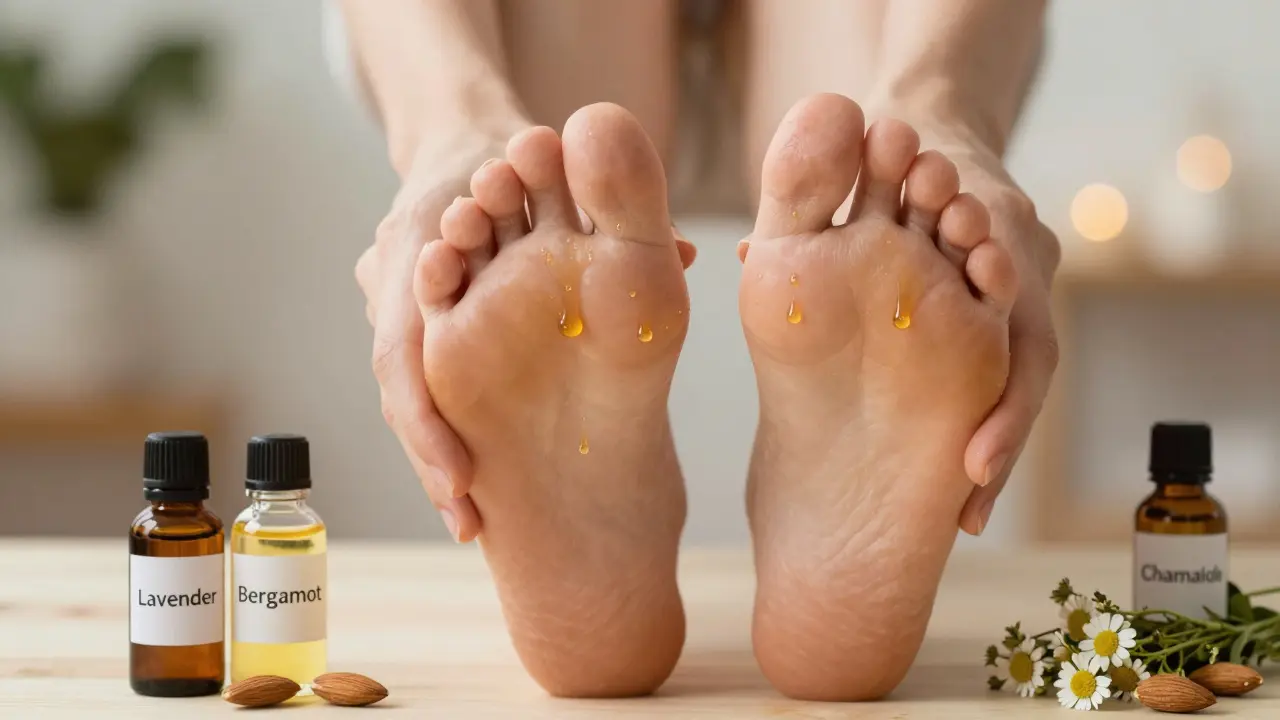
These oils are typically diluted in a carrier oil like sweet almond, jojoba, or coconut oil-never applied straight to the skin. A safe blend is 2-3 drops of essential oil per teaspoon of carrier oil.
What Happens During a Session
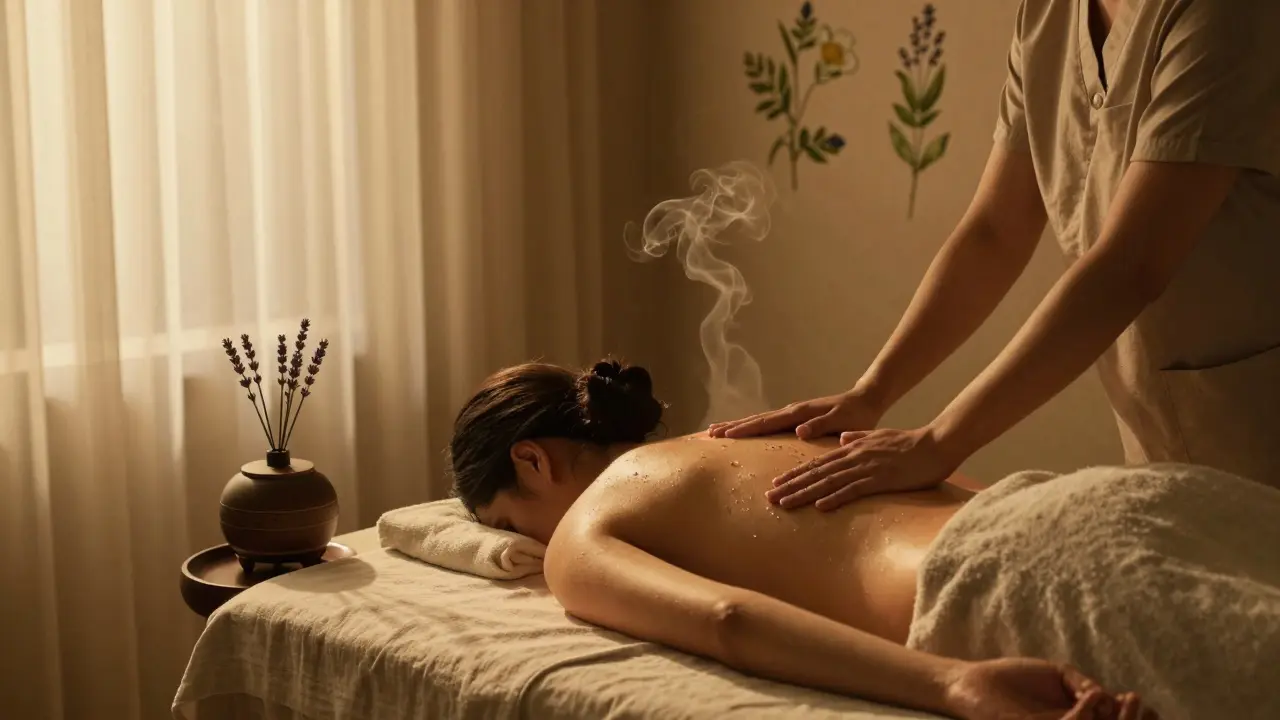
An aromatherapy massage isn’t just a regular massage with a nice smell. It’s structured to maximize both physical and emotional release. A typical 60-minute session starts with a brief intake-you talk about your stress triggers, sleep patterns, and any physical discomfort. The therapist then chooses oils based on your needs.
The massage itself uses long, flowing strokes (Swedish technique) to encourage relaxation, not deep tissue work. Pressure is gentle but consistent. The therapist might apply oil to your back, shoulders, feet, or temples-areas rich in nerve endings and easy to absorb scent. You’ll breathe in the aroma as you relax, and the scent lingers on your skin for hours after.
Many people report feeling lighter, calmer, or even emotionally released during or right after. Some cry. Others fall asleep. Both are normal. This isn’t weakness-it’s your nervous system finally letting go.
How Often Should You Do It?
One session won’t fix chronic anxiety. But consistency works. For mild to moderate anxiety or depression, most people benefit from weekly sessions for 4-6 weeks. After that, biweekly or monthly maintenance helps keep symptoms from creeping back.
A 2023 review in Complementary Therapies in Clinical Practice tracked 87 people with clinical depression who received weekly aromatherapy massage for eight weeks. Over half reported a 50% or greater reduction in depression symptoms, measured by the PHQ-9 scale. One-third no longer met the clinical threshold for depression by the end of the study.
That’s not a cure. But it’s a powerful tool-especially when combined with therapy, movement, or better sleep habits.
Who Should Avoid It?
Aromatherapy massage is safe for most people, but there are exceptions:
- People with severe asthma or allergies to specific plants should avoid oils made from those plants.
- Pregnant women should skip certain oils like rosemary, clary sage, or juniper berry-these can stimulate contractions.
- Those on blood thinners or with epilepsy should consult a doctor before using oils like rosemary or fennel.
- Never use essential oils internally or undiluted on the skin.
Always work with a licensed massage therapist who’s trained in aromatherapy. They’ll know which oils to avoid and how to adjust pressure for your condition.
Can You Do It at Home?
You don’t need a spa to benefit. A simple self-massage routine can help. Try this:
- Warm 1 tablespoon of sweet almond oil in your hands.
- Add 2 drops of lavender and 1 drop of bergamot oil.
- Massage gently into your temples, wrists, and soles of your feet.
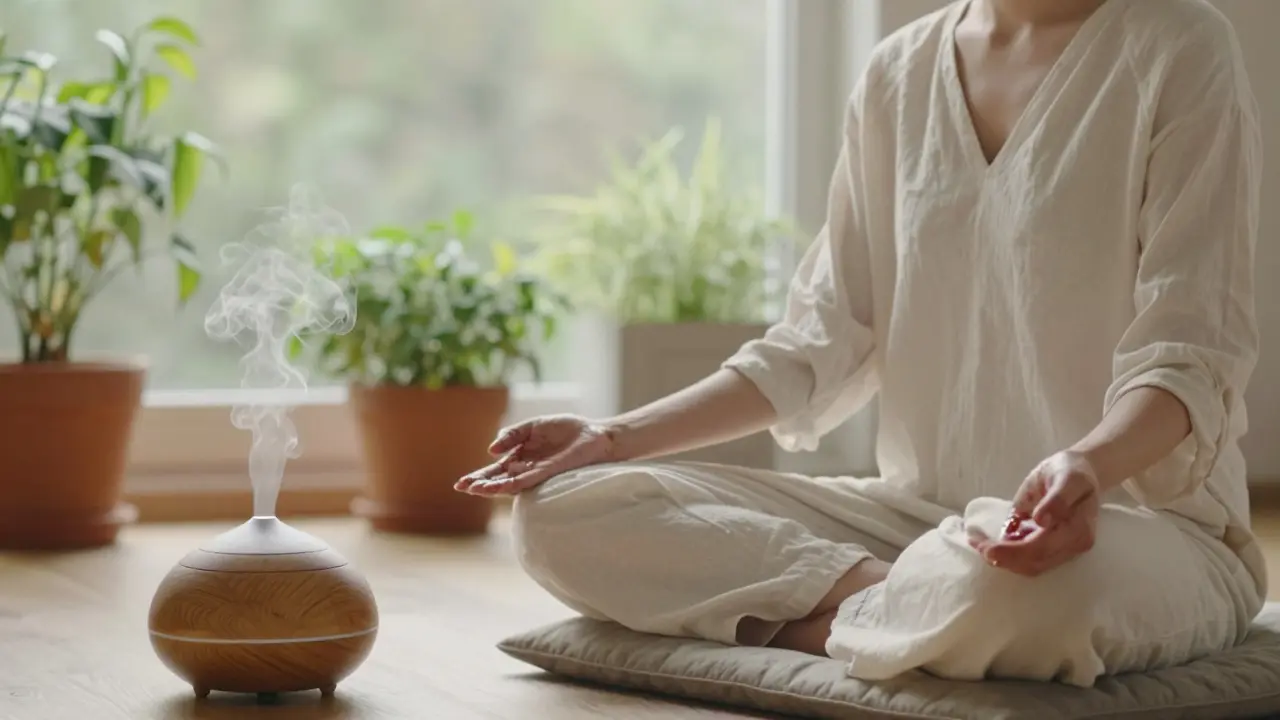
- Breathe slowly for 3-5 minutes after.
Do this before bed or after a stressful meeting. It won’t replace professional care, but it gives you control. You’re not waiting for someone else to help you feel better-you’re doing it yourself, safely and naturally.
Why This Works When Other Things Don’t
Medication helps some people. Therapy helps others. But many people with anxiety or depression feel stuck between the two-too much side effect from pills, too much effort for talk therapy on hard days. Aromatherapy massage sits in that gap. It’s physical, sensory, and emotional all at once. It doesn’t require you to talk about your trauma. It doesn’t ask you to take a pill. It just asks you to breathe, relax, and let your body remember what calm feels like.
It’s not a replacement for professional mental health care. But for millions of people, it’s the missing piece-the gentle, non-invasive way to bring their nervous system back into balance, one breath and one touch at a time.
Can aromatherapy massage replace antidepressants?
No, aromatherapy massage should not replace prescribed antidepressants or therapy for clinical depression or severe anxiety. It can be a helpful complementary treatment, especially for mild to moderate symptoms, but it’s not a substitute for medical care. Always consult your doctor before making changes to your treatment plan.
How long do the effects last after a session?
Most people feel calmer for 24-48 hours after a session, with deeper benefits building over weeks of regular use. The scent of essential oils can linger on skin and clothing for hours, providing ongoing subtle mood support. Long-term changes in stress response happen with consistent practice-like building muscle, but for your nervous system.
Are essential oils safe for children and elderly people?
Yes, with caution. Children under 6 and elderly individuals with sensitive skin or chronic conditions should use only very diluted oils (1 drop per 2 tablespoons of carrier oil). Lavender and chamomile are generally safest. Always patch test first and avoid oils like eucalyptus or peppermint in young children, as they can affect breathing.
What’s the difference between aromatherapy massage and regular massage?
Regular massage focuses on muscle tension and circulation. Aromatherapy massage adds the therapeutic use of essential oils to target emotional and nervous system responses. The oils are chosen for their psychological effects, not just scent. The technique is also gentler, designed to promote relaxation over deep tissue release.
Can I use any essential oil I have at home?
No. Not all essential oils are safe or effective for mental health. Oils like lemon, peppermint, or rosemary can be stimulating or even aggravating for anxiety. Stick to oils with proven calming effects-lavender, bergamot, chamomile, ylang-ylang, or frankincense. Always buy from reputable brands that provide GC/MS testing for purity.


About Author